
No Consolidated Cleveland County Multi-Day Arrest Log
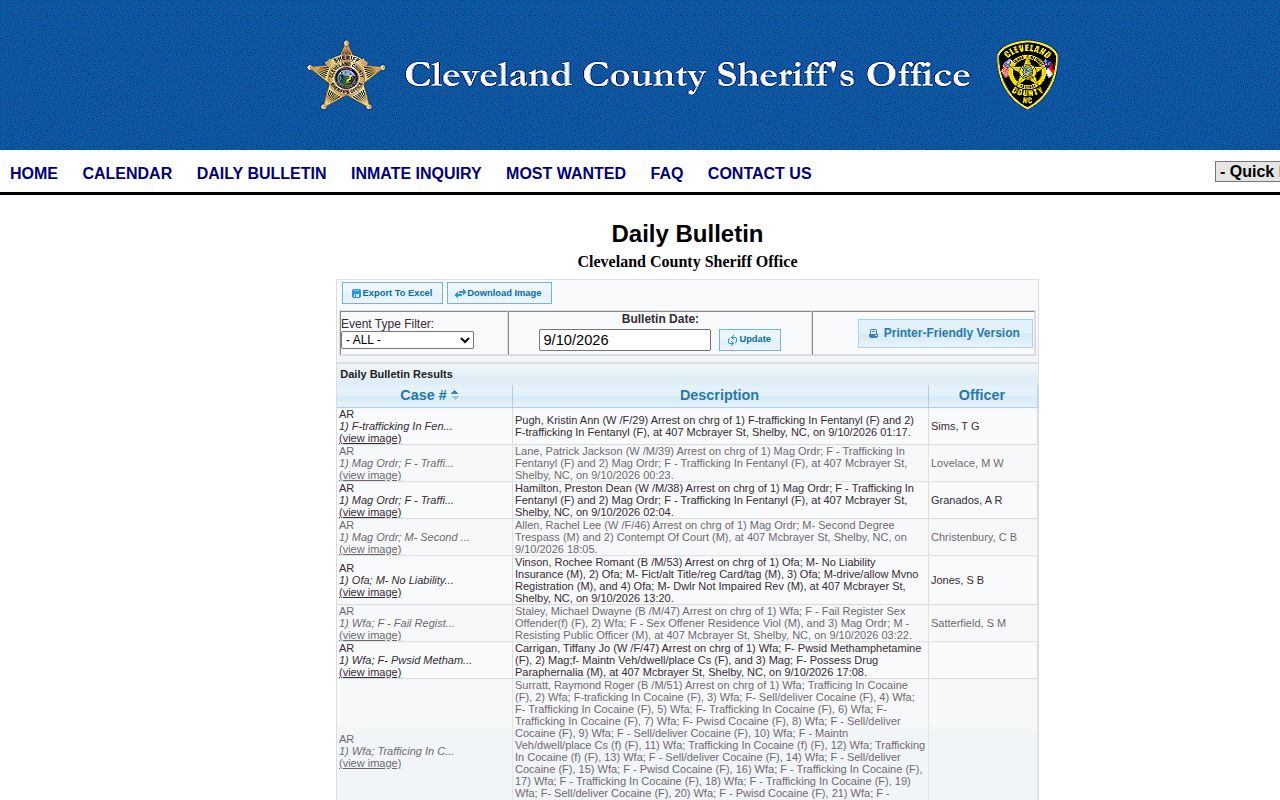
Cleveland County offers no official 72-hour, weekly, or rolling multi-day booking log. P2C Daily Bulletin from the Sheriff covers one selected date. An Arrests filter narrows the screen. It never bundles a week into a single published arrest report. Shelby, Kings Mountain, and Boiling Springs police post no municipal booking blotter either. So the honest method is a date sequence. Pull each bulletin date in range. Keep the case references. Then compare any named person against the current-custody roster. This catches distinct calendar days without pretending the county promises a seven-day database. It keeps arrest events separate from citations, ordinances, and traffic accidents.
How to Read the Cleveland County Blotter
Run each date with the same filter and keep the same notes every time. That builds a clean trail without turning separate event screens into some invented official archive.
- Open the P2C Daily Bulletin and choose the earliest date needed.
- Select Arrests, use Update, and ignore unrelated event categories.
- Record the selected date, case number, description, and officer for relevant rows.
- Advance one day and repeat through the end of the desired period.
- Open details carefully; an arrest image appears only when the event data supplies it.
- Compare a name with P2C Inmate Inquiry only to ask whether current county custody is shown.
For a single-day check, Arrests Last 24 Hours is the better route. A multi-day blotter has a different job. It tracks event chronology. It also flags gaps and later reporting. For older records, follow the records path. Regional press adds context too: WBTV Cleveland County news page carries selective coverage once the official bulletin route is exhausted.
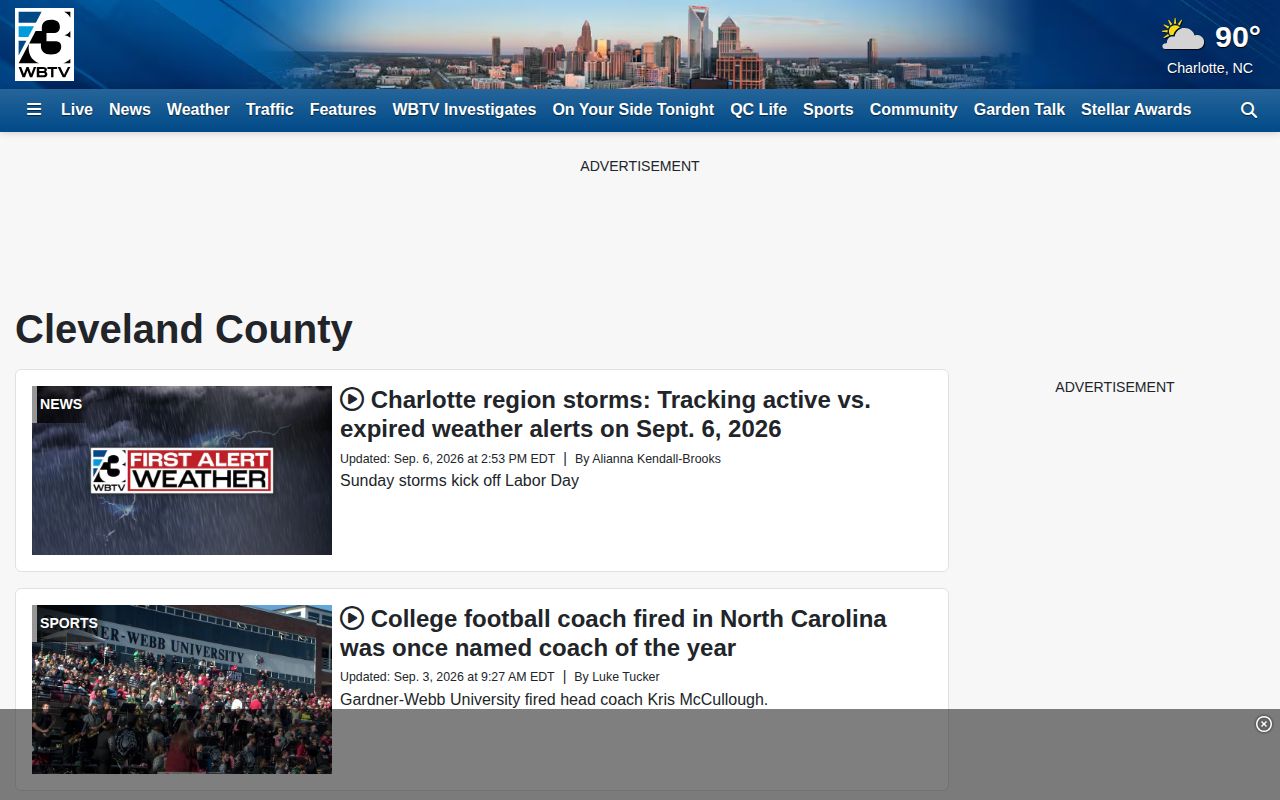
That coverage is editorial, never a complete arrest list or custody source.
Fields in a Cleveland County Arrest Event
The Daily Bulletin shows fewer columns than a full booking record. It also differs from Inmate Inquiry. So never merge the two into one supposedly complete blotter row.
| Item | Meaning and limit |
|---|---|
| Bulletin date | The date selected for reported events, subject to delayed reporting. |
| Case number | An agency reference useful for follow-up, not a final court case outcome. |
| Description | The event wording at publication time; later charges can differ. |
| Officer | The officer field associated with the event. |
| Hidden search terms | Charge, names, race, sex, crime, location, and property can support search behavior without appearing as standard columns. |
| Conditional photo | The detail path can expose an arrest image when supplied; availability is not universal. |
| Roster comparison | Name, Primary Charge, Arrest Date, and Booking Agency appear in current-custody results, not as a multi-day archive. |
The event page offers printer and Excel controls for a chosen date. Those buttons do not certify completeness or any fixed retention window. If certification or a missing field matters, request a government copy from the agency.
Weekend Arrest Reporting Across Cleveland County Dates
The Sheriff makes no weekend or holiday posting promise. A Friday arrest can land on the bulletin days later. A late-night event may sit near a calendar boundary. So search Friday through Sunday plus the following date. Never assume a Monday screen holds the whole weekend. Apply the event filter on every pass. The current roster adds a different clue. It can show someone still held in Cleveland County detention. It can also carry arrest dates from prior years; one response held 331 records. That count changes constantly, so treat it as a clue, not a statistic. The lasting point is simple. Current custody and recent event chronology are different data sets. Release creates the same split. A freed person vanishes from a live custody view. The booking record stays with the agency. A bulletin event, in turn, does not guarantee anyone is still held. When dates and status disagree, ask the Sheriff which part of the record changed.
Cleveland County Crime Maps Are Not Booking Reports
The Sheriff Crime Maps publish weekly incident maps with selectable date ranges. Fields include case number, incident type, primary crime, location, and comments. Useful geographic context, yes. But they are not arrest records. They lack the bulletin's booking-photo path entirely. For comparing dates, the official date-selected Daily Bulletin remains the arrest-event interface.
The maps also show why each date must be searched on its own. No combined weekly arrest report exists to lean on. Separate state figures cause their own confusion. The North Carolina Department of Public Safety's 2025 Cleveland County violence profile lists 4,569 total crimes and 346 violent crimes for 2023. Those are crime trend measures. They are not annual bookings, unique arrestees, or P2C row counts, so never use them to estimate jail population or fill a blotter gap.
News Reports Cover Selected Cleveland County Arrests
WBTV runs a Cleveland County desk. Its editors cover the arrests they find newsworthy. Story photos often carry an agency credit, whether the Cleveland County Jail, the Sheriff's Office, or Shelby Police. The Shelby Star keeps a local crime section too, though its site blocks outside access, so its current photo cadence is hard to judge.
News stories give useful context. They carry agency statements, follow-ups, and details a blotter skips. They are not booking feeds, though. WCCB Charlotte sometimes picks up regional cases without any dedicated Cleveland County booking index. A headline may drop routine arrests or keep the earliest wording, so check official event, custody, and court sources before treating it as complete.
Unofficial publishers roll their own county pages. RecentlyBooked claims a 30-day view. Mugshots Zone and Arrests.org showed monthly pages and date archives. Busted Newspaper and Muglist keep rolling county listings. All of it is aggregator claim, not CCSO service. No third-party links appear here, because official sources must lead.
Request Older Cleveland County Arrest Records
Date-by-date screens run dry eventually. Cleveland County offers an official written request page for that point. Give a name, a rough date range, and the arresting agency. Add any case or booking number you know. Ask for the item you want: a dated inmate list, booking sheet, release summary, Daily Bulletin export, or releasable photo. Substantial requests can take longer. Costs may apply. The county promises no fixed photo fee or completion date.
The state's sheriff retention schedule sets a baseline. It covers active and inactive inmate incarceration records. Inactive files face destruction three years after release or transfer, with the clock pausing if an audit or litigation is pending. None of this promises three years of online access. A booking photo does not vanish on a fixed date either; the Sheriff's procedures and the record's own status control.
The Clerk holds the court record. Turn there for commitments, release orders, and dispositions. The State Archives is another matter. It does not keep every local booking image. A released person, a court file, and an old publisher copy can each persist on different timelines.
A Cleveland County Police Blotter Is Not a Verdict
A blotter entry is a snapshot, not a final answer. Charges can change or drop as a case moves. Similar names make identity checks essential. For the later disposition, use the North Carolina eCourts Portal or the Clerk. Portal data is public docket information, not the official court record itself. Request the official copy. An arrest event is never the last word on a case. Neither is a news article or an unofficial archive.